When planning an electric fence, it is easy to focus on the energiser, wire, tape or rope and overlook one of the most important parts of the system: the electric fence posts. Posts provide the structure that keeps your conductors at the correct height and helps maintain a secure, effective fence line. Choosing the wrong type can lead to sagging conductors, unstable corners and unnecessary maintenance.
From lightweight plastic posts for temporary paddocks to sturdy wooden posts for permanent boundaries, different electric fencing posts are designed for different jobs. This guide explains the main types of electric fence posts, where to use them and what to consider when planning your fence.
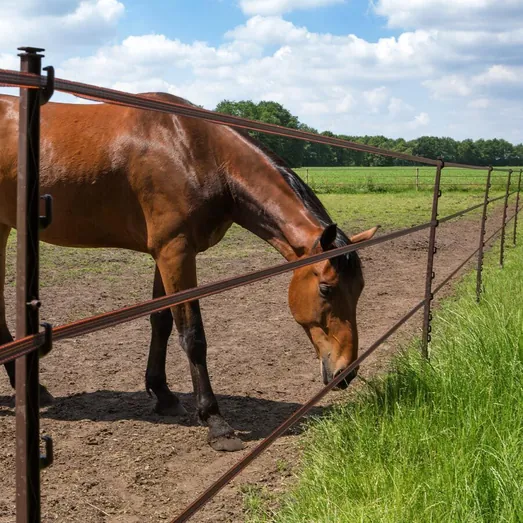
Electric fence posts do much more than simply hold up the wire.
A well-planned post system keeps electric fence wire, polywire, rope or tape positioned at the required height while helping the fence remain stable and properly tensioned.
There are generally two important roles to consider: line posts and corner or end posts.
Line posts support the conductor along straight sections of the fence. Corner and end posts have a tougher job because they must cope with the additional strain created by tensioning the conductors. For this reason, corners, gateways, ends and significant changes of direction usually require a stronger and more securely installed post.
Getting this basic structure right can make the entire electric fence easier to install, maintain and troubleshoot.
As well as choosing between plastic, timber, metal and fibreglass, consider the job each post needs to perform within the fence.
Line posts support the conductors along straight runs and help maintain the required height. Corner and end posts deal with greater strain and usually need to be stronger and more securely installed. Gateway posts provide support around access points, where conductors may need to terminate or continue through a suitable gate system.
For temporary fencing, portability is often more important, particularly where posts are regularly moved for strip or rotational grazing.
Thinking about the role of each post can help you use stronger support where it is needed while keeping the rest of the fencing system practical for its intended use.
There is no single post that is best for every electric fence. Your choice will depend on whether the fence is permanent or temporary, the animals being managed, the conductor being used and the conditions of the site.
Some of the most common options include plastic, wooden, metal and fibreglass electric fence posts.
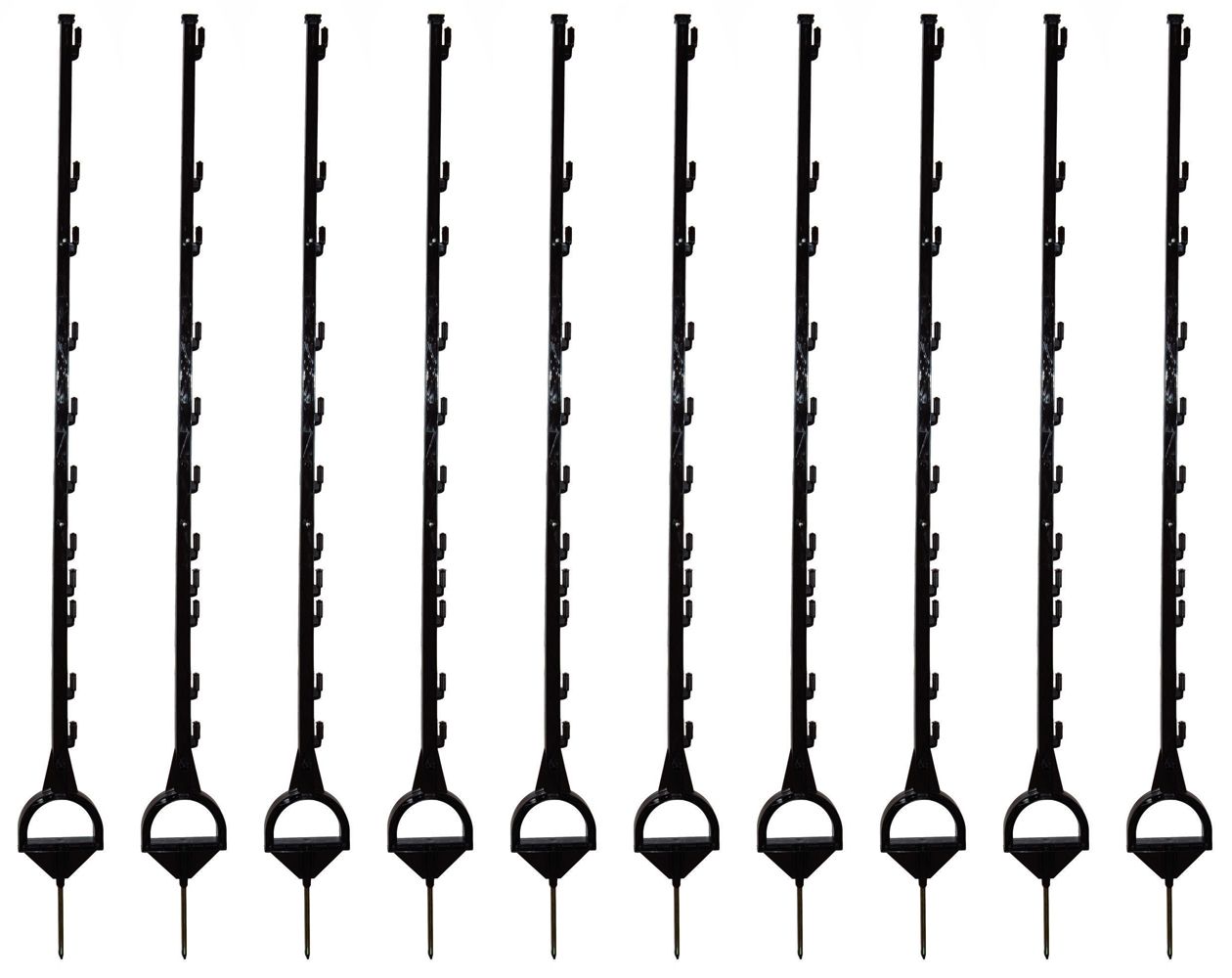
Plastic electric fence posts are a popular choice for temporary and movable fencing.
They are lightweight and quick to position, and many designs feature a footplate or spike that allows the post to be pushed directly into the ground. Built-in slots or clips can also provide several conductor-height options.
This versatility makes plastic posts particularly useful for applications such as:
Because many plastic posts incorporate insulating clips, electric fence tape, rope or polywire can often be attached directly without separate insulators.
Their portability is a major advantage. If a grazing area needs to be moved regularly, plastic posts can make setting up and taking down the fence considerably quicker.
For a long-term boundary or a corner carrying substantial tension, however, a stronger post is generally more appropriate.
For permanent electric fencing, wooden posts remain a popular option.
A properly installed timber post provides excellent stability and is particularly useful at corners, ends, gateways and other points where the fence is placed under greater strain.
Wooden posts can also be used as intermediate line posts where a more substantial permanent fence is required.
Unlike purpose-designed plastic electric fence posts, wooden posts usually require electric fence insulators to prevent the live conductor from coming directly into contact with the post.
The type of insulator should match both the post and the conductor. Different insulators are available for electric fence wire, rope, polywire and tape, as well as specialist corner applications.
Wooden posts are particularly useful when:
Installation takes more effort than pushing in a temporary plastic post, but that additional work provides a much more substantial structure.
Metal posts offer strength and durability and can be useful in both temporary and more substantial fencing systems, depending on their design.
Because metal conducts electricity, however, correct insulation is essential. Because metal conducts electricity, suitable insulation is essential. If a live conductor comes into contact with an uninsulated metal post, current can leak away from the fence and reduce its performance.
Suitable insulators should therefore be used to keep electrified wire, rope or tape securely separated from conductive metal posts.
Metal posts can be particularly useful where greater strength is needed but the convenience or installation style of a timber post is not suitable.
As with every electric fence component, make sure the post and insulator combination is designed for the conductor you intend to use.
Fibreglass posts offer another useful option, particularly for temporary and semi-permanent electric fencing.
They are generally lightweight and relatively easy to position, while their flexibility can be beneficial in applications where rigid posts aren't required.
Fibreglass is also non-conductive, which can simplify certain fence configurations. Suitable clips or insulators may still be needed to hold conductors at the correct height, depending on the particular post and fencing system.
They can be a practical choice for livestock fencing, paddock divisions and other applications where a lightweight but durable post is desirable.
One of the easiest ways to narrow down your options is to decide whether you are creating a temporary or permanent electric fence.
For temporary fencing, portability is normally a priority. Plastic, fibreglass and suitable metal posts can be quick to install, remove and reposition, making them useful for rotational grazing and temporary field divisions.
Permanent electric fencing requires a different approach.
A permanent system needs to withstand long-term conductor tension, changing weather conditions and regular exposure to livestock and vegetation. Strong wooden or suitable steel posts can therefore provide the structural support required, particularly at corners, ends and gateways.
You can also combine post types.
For example, a permanent fence might use substantial timber posts at corners and ends, with lighter line posts supporting the conductor along straight runs. This provides strength where it is most needed without necessarily requiring the same heavy-duty post throughout the entire fence.
Corners, ends and gateways generally place more strain on electric fence posts than straight sections of the fence. As conductors are tensioned or change direction, these posts need to provide enough support to keep the fence stable and properly positioned.
Use stronger, securely installed posts at these points rather than relying on lightweight line posts. The amount of support required will depend on the fence design, conductor type and level of tension.
Gateways also need careful planning. Posts on either side should provide a stable point for terminating or continuing conductors while allowing gates and electric fence connections to operate correctly.
There is no universal electric fence post spacing that works for every installation.
The correct distance depends on factors including:
Flat, straight ground may allow posts to be positioned further apart because it is easier to maintain a consistent conductor height. Uneven or rolling ground often requires posts to be closer together so the wire follows the contours without becoming excessively high or low.
The goal isn't simply to use the fewest posts possible. Posts should be positioned closely enough to keep the conductor supported, visible and at an appropriate height for the animals being managed.
Corners, gateways and significant changes in direction should be treated differently from straight runs because these areas usually experience greater mechanical strain.
Always follow the recommendations for your particular fencing system rather than relying on one spacing measurement for every installation.
Ground conditions can affect both the type of electric fence post you choose and how closely posts need to be positioned.
Firm, level ground can make it easier to maintain a consistent fence line, while soft, wet or uneven ground may require additional support. Exposed locations can also place greater pressure on posts and conductors, particularly when using wider electric fence tape.
Consider slopes, dips and changes in ground level when planning the post layout. Additional posts may be needed in these areas to keep conductors at a suitable height and prevent excessive sagging.
Always follow the installation guidance for the posts and fencing system you are using.
The animals being managed will influence the height, strength and portability required from your electric fence posts.
For horses, posts need to support a clearly visible conductor such as suitable tape or rope at the required height. Cattle grazing systems may use lightweight movable posts for temporary paddocks and strip grazing, while permanent boundaries generally require a more substantial structure.
For sheep, post choice should suit the number and position of conductors used in the particular fencing system. Electric poultry netting often has integrated posts, although additional support may be useful at corners or other areas where greater stability is required.
Whatever the livestock, choose posts that suit the fence layout, conductor and intended use rather than selecting them based on material alone.
It depends on the post.
Many plastic electric fence posts feature integrated slots or clips designed to hold the conductor while keeping it insulated.
Wooden and metal posts normally require separate electric fence insulators.
Insulators are a small component with an important job: they prevent electricity from leaking away through the post instead of continuing along the fence.
They should also be matched to the conductor. Wide electric fence tape, for example, requires a suitable tape insulator, while rope and wire may require different designs.
Corners deserve particular attention. The conductor changes direction at these points and can place considerable pressure on the insulator, so using an appropriate corner or strain insulator can improve reliability.
Even good-quality electric fence posts can perform poorly if they're installed incorrectly.
One common mistake is using lightweight line posts as corners. A straight-line post primarily supports the conductor, while a corner post must resist tension pulling from different directions. Using an unsuitable corner post can result in leaning posts and loose conductors.
Another issue is spacing posts too widely on unsuitable terrain. If the conductor sags significantly between posts or fails to follow changes in ground level, the fence may no longer sit at the correct height.
Other mistakes include:
Planning the post layout before installation can prevent many of these problems.
Before buying electric fence posts, think about the complete fencing system rather than considering the posts in isolation.
Ask yourself:
Is the fence permanent or temporary?
Choose portable posts for regularly moved fences and more substantial posts for permanent installations.
What animals am I fencing?
The species, size and behaviour of the animals will influence the required fence height and number of conductors.
Which conductor am I using?
Make sure the post or insulators are compatible with your chosen electric fence wire, tape, rope or polywire.
What is the terrain like?
Slopes, dips, corners and uneven ground can require additional posts or stronger support.
Where will the greatest tension occur?
Corners, ends and gateways normally require stronger posts than straight sections.
Considering these factors before installation can help you create an electric fence that is more stable, effective and easier to maintain.
Choosing the right electric fence posts starts with understanding the job each post needs to do. Temporary fencing may benefit from lightweight, portable posts, while permanent boundaries, corners, ends and gateways generally require greater structural support.
Consider the animals being managed, conductor type, terrain, fence layout and whether the system needs to be moved regularly. Planning these points before installation can help keep conductors properly supported and make the finished fence easier to maintain.
Explore our range of electric fence posts for temporary and permanent electric fencing applications.