Choosing between temporary and permanent electric fencing depends on how the land is used, the animals being contained and how often the fence needs to be moved. While both systems use an energiser to deliver controlled electrical pulses through the fence line, their construction, durability and flexibility can be very different. In this guide, we compare temporary and permanent electric fencing, explain where each works best and look at how the two can be combined to create a practical fencing system for your land and livestock.
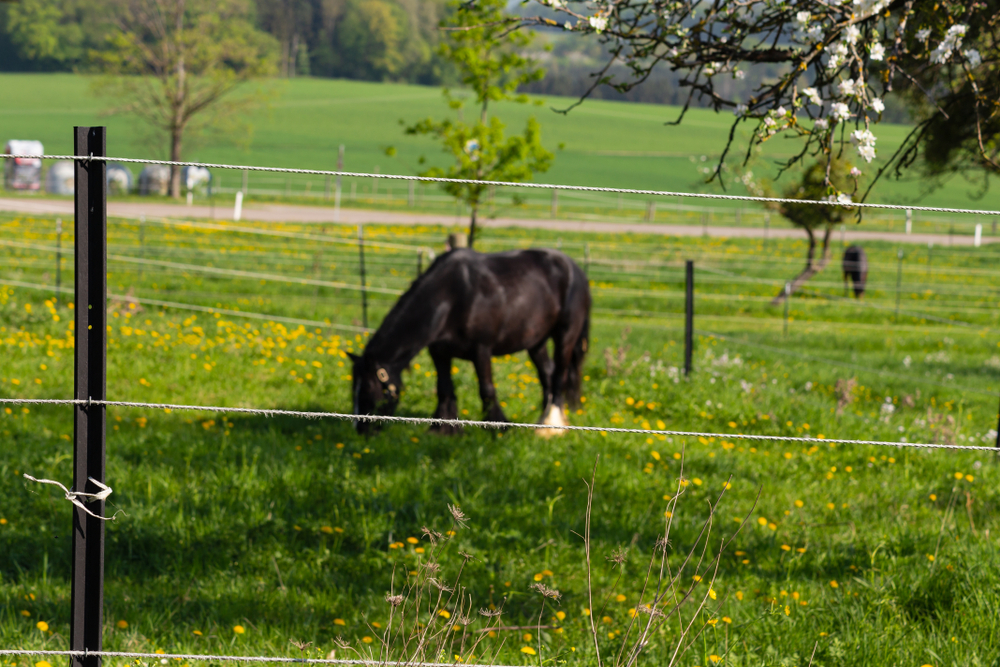
Temporary electric fencing is designed to be quick to install, easy to move and simple to adapt as your requirements change. Rather than creating a fixed boundary, it allows farmers, smallholders and landowners to divide or manage areas of land as required.
A typical temporary electric fence may use lightweight plastic or fibreglass posts combined with electric fence tape, polywire or electric rope. The fence is connected to a suitable energiser, with battery and solar-powered options particularly useful in locations where mains electricity is unavailable.
Temporary fencing can be ideal for:
One of the biggest advantages is flexibility. Posts and conductors can be repositioned without the work involved in altering a permanent fence, making temporary systems particularly useful for changing grazing plans.
Permanent electric fencing is intended to create a longer-term boundary. It typically uses more substantial fence posts and durable conductors, such as high-tensile wire, alongside appropriate insulators, tensioners and other fittings.
Because a permanent system is expected to remain in place for years, careful planning is important. The route, post spacing, gateways, corners, vegetation, earthing and energiser requirements should all be considered before installation begins.
Permanent electric fencing is well suited to:
Although installation generally requires more time and materials than a temporary system, the result can provide a robust and low-maintenance solution when correctly designed and maintained.
The main difference is how each fence is intended to be used. Temporary fencing prioritises portability and convenience, whereas permanent fencing prioritises durability and long-term performance.
Temporary systems generally use lightweight posts and portable conductors that can be installed, removed and repositioned relatively quickly. Permanent systems tend to use stronger posts, more durable wire and fittings designed to withstand long-term exposure to weather and livestock.
Cost should also be considered. A basic temporary fence can require less initial investment, particularly for a small area. However, repeatedly using lightweight components where a long-term boundary is needed may prove less practical over time.
A permanent fence can involve a greater upfront investment in posts, wire, insulators, strainers and installation, but it may offer better value where the fence line is unlikely to change.
The right choice therefore isn't necessarily the cheapest system to purchase. It is the system that best matches how you intend to manage your land.
Temporary electric fencing comes into its own when flexibility is the priority.
Rotational grazing is a good example. Livestock can be moved between sections of a field while temporary fencing is repositioned to control access to fresh grazing. This can make pasture management more adaptable without requiring numerous permanent internal boundaries.
Temporary systems are also useful when grazing arrangements change throughout the year. You might need a particular division for several weeks or months but want to remove it later.
Portable electric fencing equipment can include:
A reel can be particularly useful for longer temporary fence lines because it makes paying out, tensioning and collecting the conductor much easier.
When selecting temporary fencing, make sure that the posts, conductor and energiser are suitable for the animals you intend to contain. A setup suitable for cattle, for example, may not necessarily be the best configuration for sheep, horses or other livestock.
If the boundary is unlikely to move, a permanent electric fence will often be the more practical choice.
A permanent system uses a more substantial structure to keep conductors correctly positioned over the long term, while the electrical pulse encourages livestock to respect the boundary.
Permanent installations may use high-tensile wire because of its strength and ability to maintain tension over longer distances. Strong corner and end posts help support the strain of the wire, while appropriate insulators prevent electrical current from leaking into wooden or metal posts.
You may need components such as:
It is worth investing time in planning the fence before installation. Corners, gateways and changes in direction need particular attention because these points can place additional strain on the fence.
Both temporary and permanent electric fences need an energiser suited to the complete installation. Consider the total conductor length, number of electrified strands, vegetation pressure, livestock and conditions rather than choosing solely by the physical boundary length.
Mains energisers are a practical option where a suitable power supply is available, while battery and solar units can provide greater flexibility for remote or temporary fencing.
Always check the manufacturer's specifications when selecting an energiser to make sure it is suitable for the intended fence setup.
The livestock being managed should influence whether a temporary, permanent or combined fencing system is most suitable.
Temporary electric fencing can be particularly useful for cattle where paddocks or grazing areas regularly change. For horses, conductor visibility and a stable fence line are important considerations, while sheep may require a system capable of supporting the conductor arrangement needed for the particular setup. Electric poultry netting can also provide a portable option for some temporary poultry enclosures.
Consider how the animals will interact with the fence, alongside the required height, number of conductors and how frequently the boundary needs to move. The posts, conductors and energiser should all be suitable for the livestock and intended application.
The layout and condition of the land can also influence whether temporary or permanent electric fencing is more practical.
Temporary fencing is particularly convenient where fence lines need to move regularly and the ground allows posts to be installed and repositioned easily. Permanent fencing may be better suited to established boundaries or more complicated routes where corners, gateways and changes in direction require greater structural support.
Slopes, dips and uneven ground may require additional posts to keep conductors correctly positioned. Vegetation should also be considered, as grass, weeds, hedges and overhanging growth touching live conductors can reduce fence performance.
Walk the proposed fence route before choosing your equipment and identify any corners, gateways, uneven ground or areas of heavy vegetation that could affect the installation.
Effective earthing is essential for both temporary and permanent electric fences because it provides the return path needed to complete the electrical circuit when an animal contacts the fence.
The required earth system will depend on the energiser and local ground conditions. Use suitable earth stakes, clamps and cable, follow the energiser manufacturer's installation guidance and check the completed system with appropriate testing equipment.
Poor earthing can reduce fence performance, so it is worth checking as part of both initial installation and ongoing maintenance.
You don't always have to choose one or the other. For many farms and smallholdings, a combination of permanent and temporary electric fencing offers the best solution.
A permanent electric fence can form the main perimeter or long-term paddock boundaries, while temporary fencing can be used inside those areas for rotational or strip grazing.
This hybrid approach provides a dependable outer boundary while retaining the flexibility to change internal grazing areas throughout the year.
For example, a large field might have permanent electrified perimeter fencing, with temporary posts and polywire used to create smaller grazing sections. As livestock move onto fresh pasture, the temporary fence can move with them.
This can be a particularly practical approach where land management requirements change throughout the seasons.
The right system depends primarily on how long the fence needs to remain in place and how often the layout is likely to change.
Choose temporary electric fencing where portability is important, such as strip grazing, rotational grazing, temporary paddocks and seasonal field divisions. Lightweight posts, portable conductors and reels make these systems easier to move as grazing requirements change.
Permanent electric fencing is generally more suitable for long-term boundaries and paddocks that are unlikely to move. More substantial posts, durable conductors and permanent fittings provide the structure needed for a longer-term installation.
You can also combine the two. Permanent fencing can establish the main boundaries, while temporary fencing provides flexible internal divisions for day-to-day grazing management.
Whichever type of fencing you choose, regular maintenance helps keep it performing effectively.
Walk the fence line periodically and look for damaged posts, loose conductors, broken insulators and poor connections. Vegetation touching the electrified conductor can also drain power from the fence, so grass, weeds and overhanging growth should be managed where necessary.
Use an electric fence tester to check voltage rather than relying on appearance alone. If performance has dropped, work methodically through the system, checking the energiser, fence line, connections and earthing.
Temporary systems should also be checked whenever they are moved or reinstalled. Permanent fencing may remain in the same position, but seasonal weather, vegetation and livestock pressure can still create faults over time.
When comparing temporary and permanent electric fencing, the right choice depends on how the fence will be used.
Choose temporary electric fencing when portability, flexibility and quick installation are priorities. It is particularly useful for rotational grazing, temporary paddocks and frequently changing field divisions.
Choose permanent electric fencing when you need a durable, long-term boundary that will remain in roughly the same position for years.
For many livestock owners, combining the two provides an effective solution: permanent fencing for key boundaries and temporary electric fencing for flexible internal divisions.
Whichever system you choose, success depends on using compatible electric fencing equipment, selecting an appropriate energiser, installing effective earthing and regularly testing the fence. Plan the system around your livestock and land from the beginning, and you'll have an electric fence that is easier to manage, maintain and adapt to your needs.
Explore our range of electric fencing equipment for temporary and permanent installations, including energisers, posts, conductors, insulators and accessories.